
NPM AI: An Internal Knowledge Oracle Built for Scale
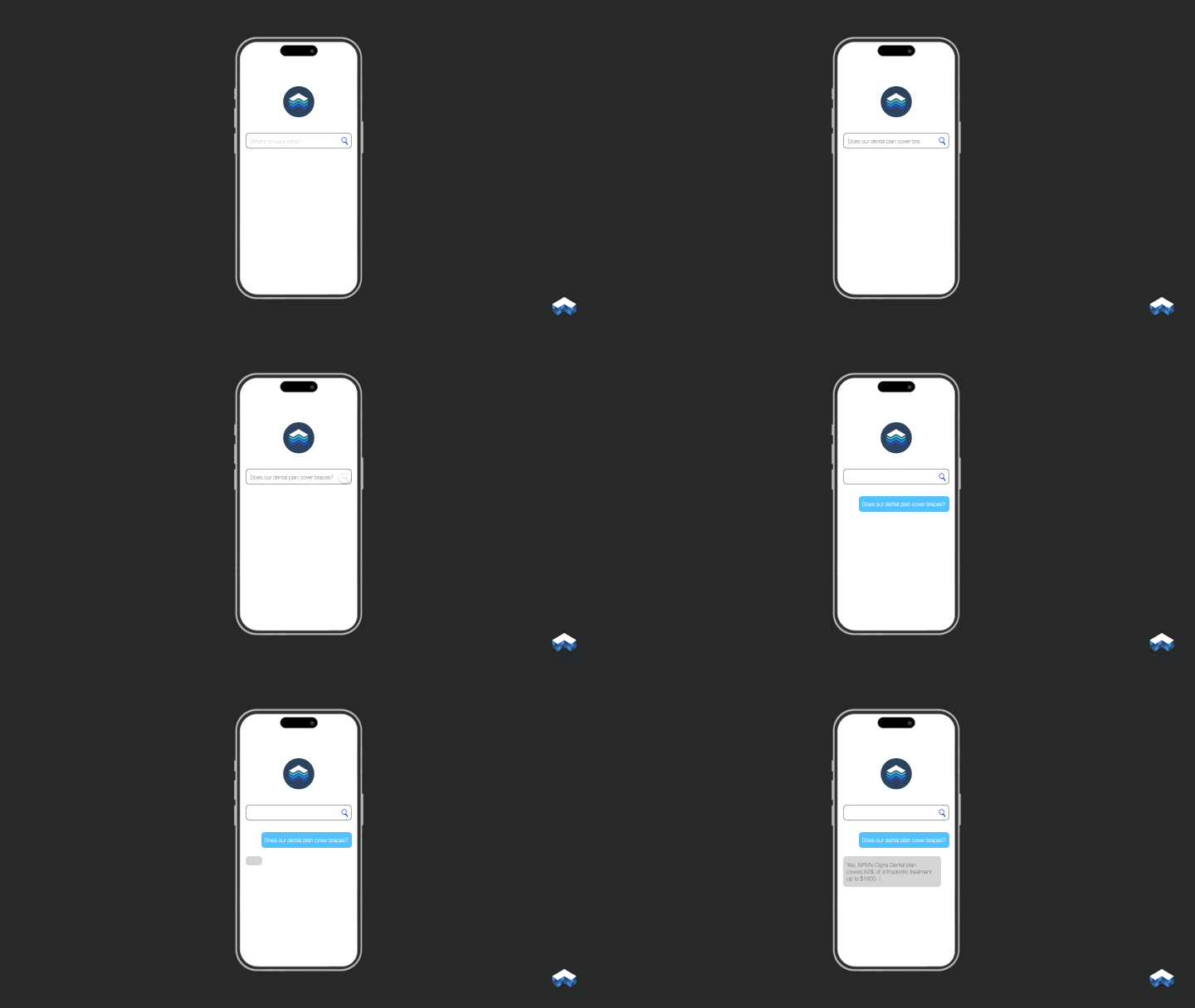
This Project At a Glance
I led the strategy and development of an internal, RAG-based AI platform designed to give North Point Ministries staff fast, trustworthy access to organizational knowledge while reducing redundant AI tooling costs and fragmentation.
Client: North Point Ministries (Digital Services Team)
Platforms: AWS, Rock RMS (Desktop & Mobile), Claude (model-agnostic architecture)
Scope: Product vision, data strategy, AI architecture, UX, platform integration
Audience: 600+ staff across nine Atlanta-area campuses
The Challenge
Staff were increasingly relying on a growing mix of paid AI assistants for light tasks, while critical organizational knowledge remained fragmented across Slack, HR sites, ad-hoc internal wikis, and staff resources.
The Outcome
We began building a single, secure AI-powered source of truth that unified organizational knowledge, reduced redundant AI usage, and laid the groundwork for more intelligent, context-aware ministry workflows.
About This Project
The Context: Fragmentation at Scale
As AI adoption increased across the organization, our Digital Director began noticing rising costs tied to individual AI subscriptions, often underutilized but billed regardless of usage. At the same time, I observed that most staff were using AI for simple tasks like grammar, rewrites, and light copyediting.
Meanwhile, truly important information, org charts, HR policies, staff resources, onboarding materials, and best practices, lived across disconnected systems with no easy way to retrieve or update them quickly.
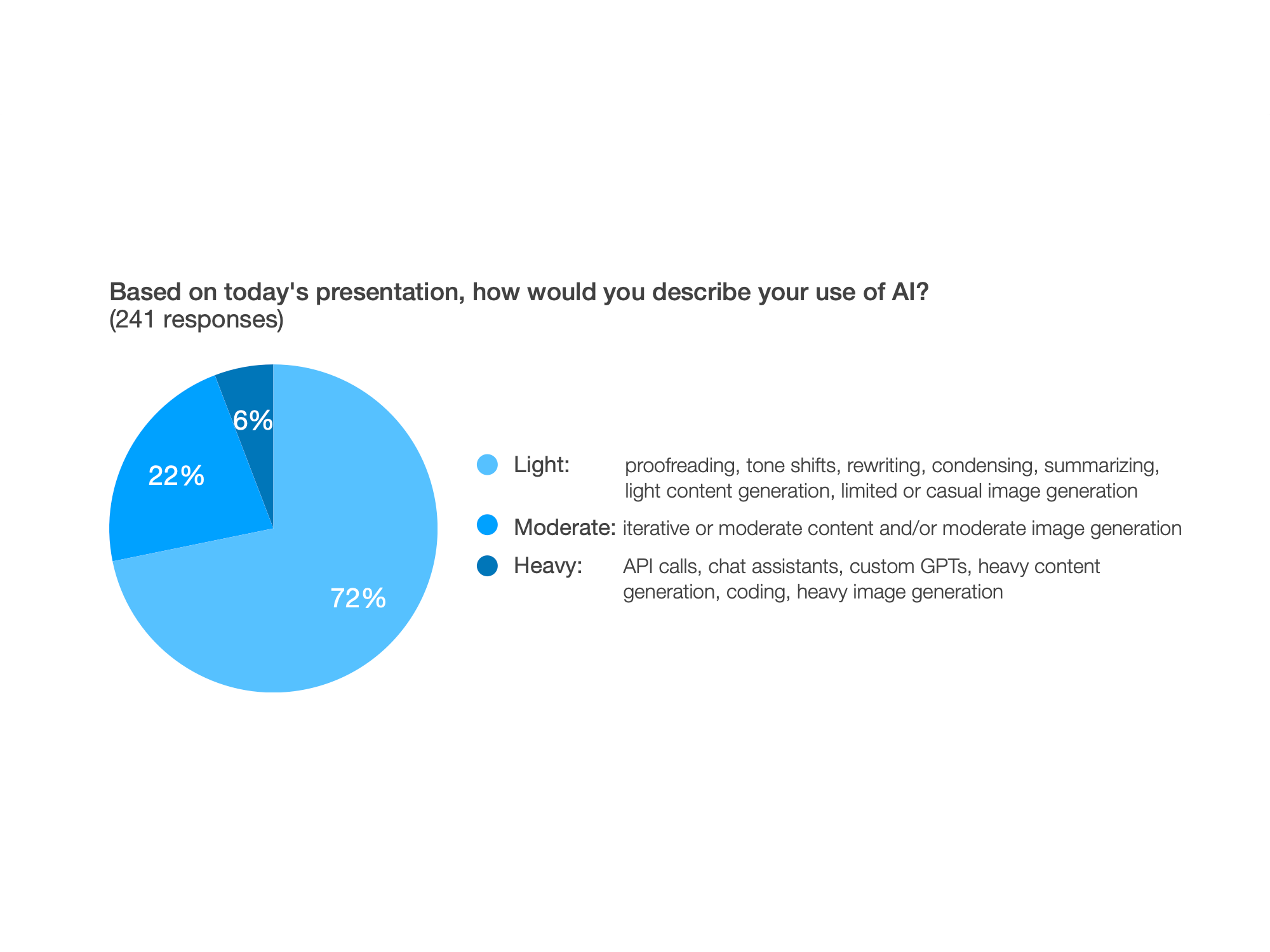
Feedback from over 40% of staff confirmed that AI was already in use across the organization, with the majority applying it lightly for practical, day-to-day work.
Reframing the Opportunity
Rather than treating AI as a collection of tools, I proposed we think of it as infrastructure. What if we could create a single, trusted AI assistant trained on our organization’s knowledge, voice, and values, accessible through plain-English questions?
I advocated for building a Retrieval-Augmented Generation (RAG) chatbot that could serve as an internal “organizational oracle,” giving staff immediate answers while maintaining security and control.
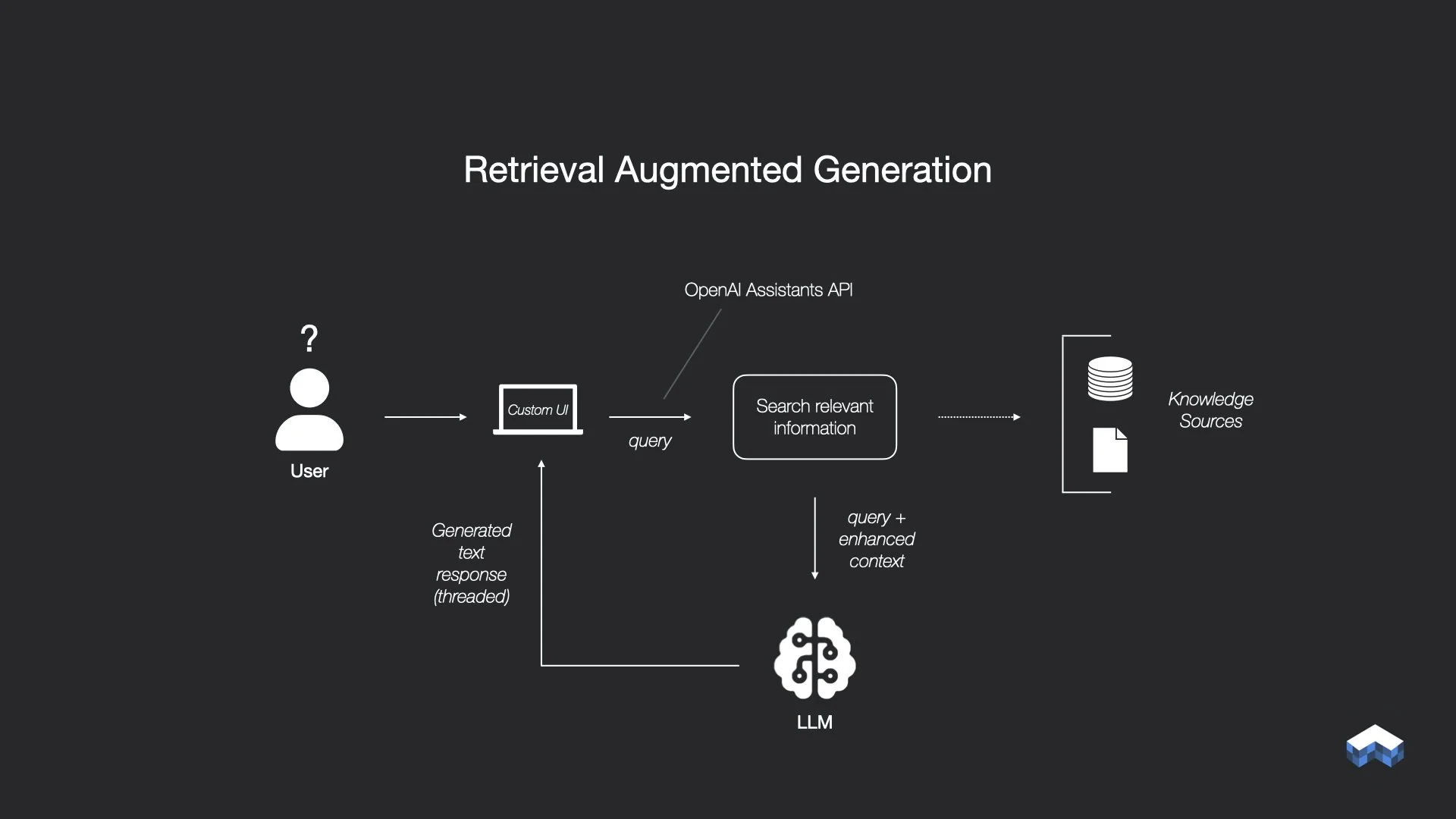
A conceptual RAG architecture diagram I created to help senior leadership understand how an internal AI assistant could securely retrieve organizational knowledge and deliver clear, contextual answers.
Designing for Scale and Flexibility
We intentionally built the platform on AWS with a model-agnostic architecture, allowing us to swap underlying LLMs based on performance, speed, and cost over time. We ultimately selected a Claude model that struck the right balance for our needs, but avoided locking ourselves into any single vendor.
We curated and structured organizational documentation across HR, operations, staff culture, and ministry practices, including training the system on our copy standards so it could provide immediate, on-brand copy feedback with the ultimate goal of potentially replacing the human review process.
Integration and Long-Term Vision
We embedded NPM AI directly into Rock RMS on desktop and mobile, making it easy for staff to ask real questions in the flow of their work. I cast vision for future integrations where the AI could reason against Rock data itself, enabling scenarios like recommending potential volunteer leaders based on engagement, availability, and qualifications.
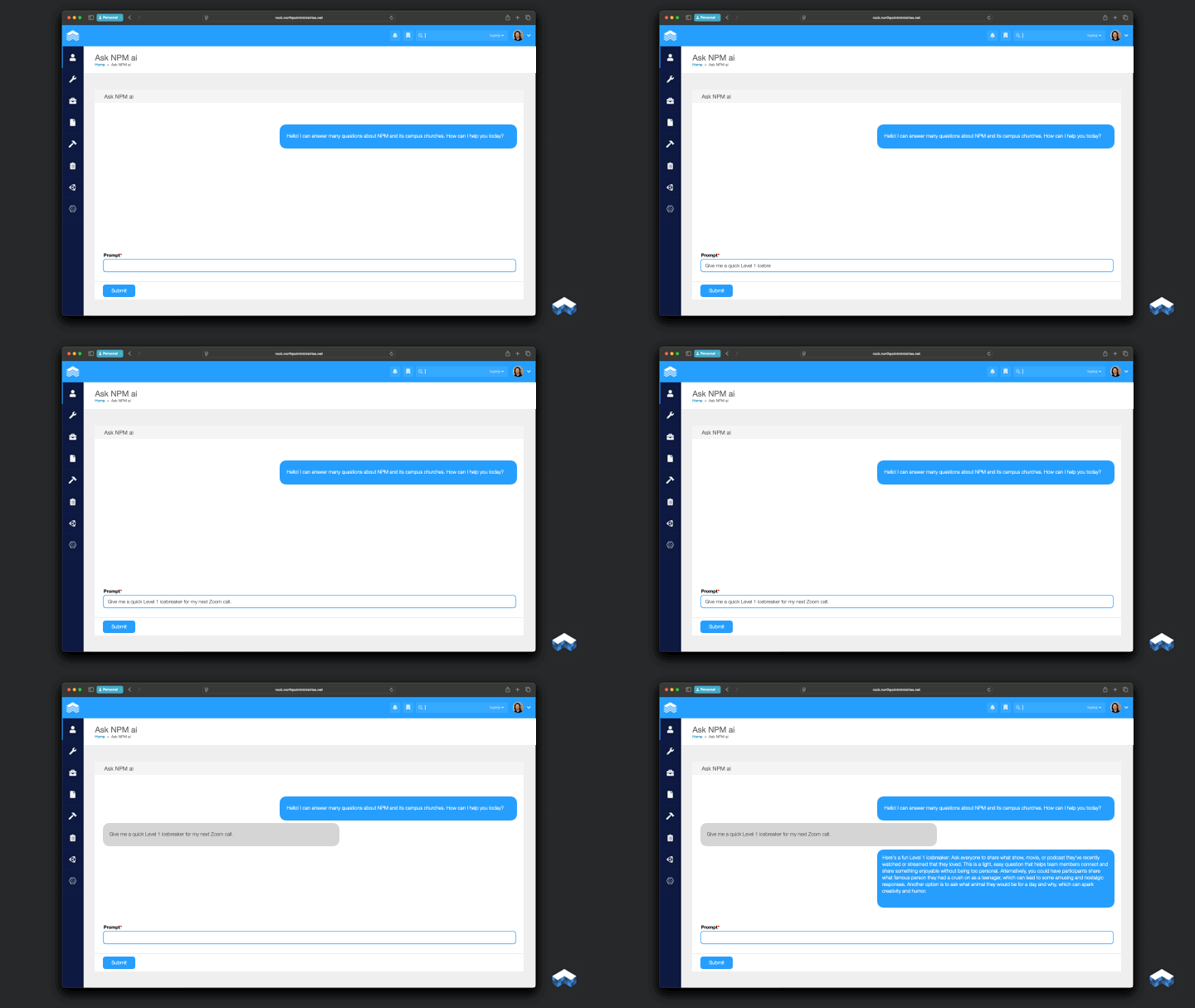
A working mockup of NPM AI integrated into Rock’s desktop experience, designed to give staff fast, plain-English access to trusted organizational information.
The Impact
The project laid groundwork and created infrastructure toward unifying scattered knowledge into a single access point, reducing reliance on disconnected AI tools, and reframing AI as a shared organizational capability rather than an individual productivity hack.
Why It Mattered
This work laid the foundation for smarter, more scalable ministry by putting the right information in front of staff at the right moment, while balancing innovation with cost, security, and long-term stewardship.